
Industrial Conveyor Belt Selection: Belt Type, Width, and TPH Calculation
A conveyor belt is not a commodity. Wrong width steals 30% capacity; wrong speed steals belt life; wrong cover compound costs you everything. Here is the right way to spec one.
Conveyor Belts Are Not a Commodity
Walk into any quarry and you will find dozens of conveyor belts. They look identical from a distance. They are not. Belt width, speed, cover compound, EP class, and idler spacing each move TPH and belt life by double-digit percentages. Get them right the first time, or pay every shift.
The TPH Formula
Belt capacity in tons per hour, for a flat belt with troughed idlers, is approximately:
TPH ≈ 60 × A × v × ρ
Where:
- A = effective cross-sectional area of the load on the belt (m²)
- v = belt speed (m/min)
- ρ = bulk density of material (t/m³)
For practical sizing of a 1000 mm wide belt at 1.5 m/s with 35° trough angle and limestone (1.5 t/m³): A ≈ 0.108 m², v = 90 m/min, TPH ≈ 60 × 0.108 × 90 × 1.5 ≈ 875 TPH theoretical / 700 TPH practical (80% utilization).
The Width Decision
| Capacity (TPH) | Belt width (mm) | Speed (m/s) |
|---|---|---|
| Up to 200 | 500–650 | 1.0–1.6 |
| 200–500 | 800–1000 | 1.3–1.8 |
| 500–1200 | 1000–1200 | 1.5–2.5 |
| 1200–3000 | 1400–1600 | 2.0–3.5 |
EP Belt Class — Don't Get Sold the Wrong One
EP (polyester/nylon) carcass classes go from EP-200 to EP-2000+. The class describes the breaking strength per centimeter. For mining and quarry duty in Egypt:
- Up to 50 m horizontal length, light feed: EP-400/3 ply
- 50–150 m, normal duty: EP-500/4 to EP-630/4
- 150–300 m or inclined heavy: EP-800/4 to EP-1000/5
- Long overland or ship loading 300+ m: EP-1250/5 or steel cord
Cover Compound — Where Belts Die
- Type N (general purpose): abrasion-resistant, the default for limestone, basalt, aggregate.
- Type Y (super abrasion-resistant): for sharp rock, high-impact zones, sinter.
- Type DIN-W (high abrasion + cut): phosphate, quartz, sharp granite.
- Type T (high temperature): hot clinker (cement) — up to 150°C continuous.
- Type G (oil resistant): wet sand and asphalt feed lines.
Five Mistakes That Wreck Belt Life on Egyptian Sites
- Buying flat belts and accepting the 30–40% capacity loss vs troughed.
- Under-spec'd cover thickness on the carry side at impact zones.
- Wrong idler spacing — too far apart causes belt sag and spillage.
- Skipping skirting and impact bars at chute drops.
- No takeup compensation — long belts need automatic gravity or screw takeup.
What Pillar Supplies
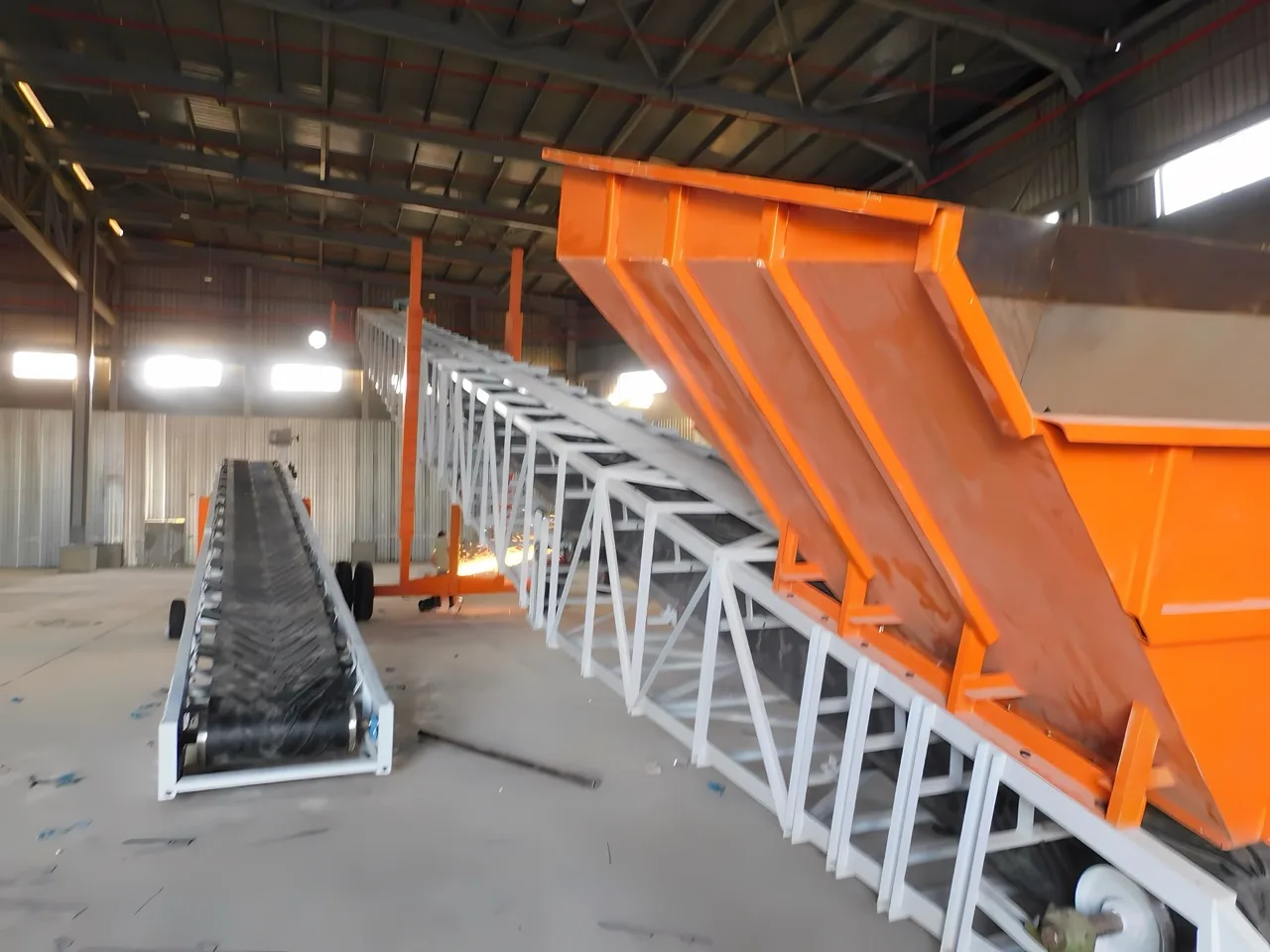
We supply complete conveyor systems — belts (EP-400 to EP-1250), idlers (carry, return, impact), drums (drive and tail with pulley lagging), drives (gearmotor or fluid coupling), and ship loading systems up to 50 m for grain, sand, and aggregate. Designs include automatic belt centering, scrapers, and skirting. We bring belts in 50–500 m runs as one-piece for fewer joins.
Ready to Move Forward?
Pillar's engineering team has delivered turnkey crushing, screening, conveyor and asphalt solutions across Egypt — from Upper Egypt cement plants to Sinai phosphate operations. If you're sizing equipment for a new project, evaluating ROI, or upgrading existing capacity, we can help you spec the right system the first time.
Request a Quote → or call +20 107 067 0649.