
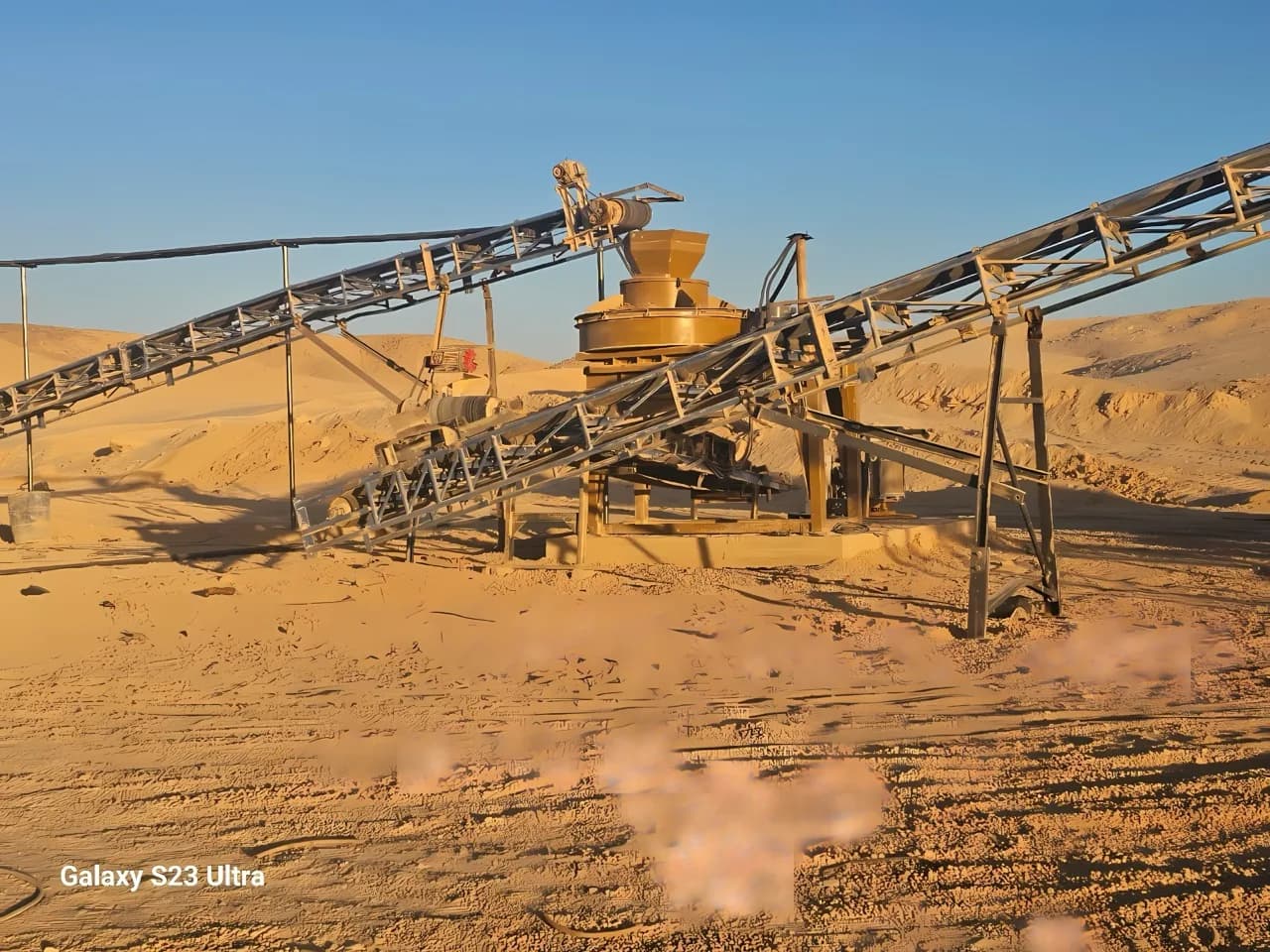
Limestone Crushing for Cement Plants: Capacity Planning & Equipment Layout
A cement plant cannot pause when the limestone supply slips. The crushing line is the heartbeat — under-spec it and the kiln runs short, oversize it and capex is wasted. Here is the right way to size and lay it out.
The Crushing Line Is the Heartbeat of a Cement Plant
A cement kiln consumes between 1.4 and 1.6 tons of raw mix per ton of clinker. For a 4.0 Mt/year plant, that is roughly 18,000 tons/day of crushed limestone — every day, no exceptions. If the crushing line falls behind by even 8 hours, the raw mix silo runs dry and the kiln shuts down. A kiln restart costs 2–4 days of production. The crushing line capex of 30–80 million EGP is a rounding error compared to a single avoided shutdown.
Capacity Planning: How to Size for a Cement Plant
The right rule for cement service is to size at 120% of average kiln demand, with twin parallel lines for plants over 2.0 Mt/year. Twin lines mean the plant can survive maintenance on one line without halting the kiln.
| Cement Plant Size | Daily Limestone | Crushing Line TPH | Configuration |
|---|---|---|---|
| 1.0 Mt/year | 4,500 t/day | 250–320 TPH | Single line |
| 2.0 Mt/year | 9,000 t/day | 2 × 250 TPH | Twin parallel |
| 4.0 Mt/year | 18,000 t/day | 2 × 500 TPH | Twin heavy duty |
Standard Equipment Layout for a 250 TPH Line
- Apron feeder from primary stockpile to crusher (heavy duty, dust-tolerant)
- Vibrating grizzly to scalp fines that bypass crushing
- Primary crusher — single-stage hammer crusher or impact crusher (limestone is friable; hammer mills work well at this scale)
- Discharge belt with magnet and metal detector
- Buffer stockpile sized for 24–48 hours of kiln consumption
- Reclaim conveyor to raw mix grinding circuit
Why Hammer Crushers Dominate at This Stage
Cement plants almost always use single-stage hammer crushers (or hammer-impactors) for primary limestone crushing. Reduction ratios of 25:1 in a single pass are routine — feeding 1,200 mm boulders and producing 25–50 mm output for the raw mill. This is impossible with jaw + cone, which would require 2–3 stages and double the conveyor count. Capex on a hammer line is 30–40% lower than a multi-stage crushing circuit at the same capacity.
Capex for Cement Crushing Lines (Turnkey, EGP)
- Single 250 TPH line: 28 – 38 million
- Twin 250 TPH lines: 50 – 68 million
- Twin 500 TPH lines (heavy duty): 95 – 135 million
Three Mistakes That Hurt Cement Plants
- Single line for plants over 2 Mt/year. First scheduled maintenance becomes a kiln-stopping crisis.
- Skimping on the buffer stockpile. 24–48 hours of consumption between crusher and raw mill is non-negotiable. Plants that designed for 8 hours regret it permanently.
- Magnet placement. Tramp metal in raw mix damages the raw mill far worse than the crusher. Magnet must be after primary crushing, before the buffer.
Pillar's Cement Sector Experience
We have supplied conveyor belt systems, vibrating feeders, bunker systems (5–20 m³), and PLC control panels for cement plants in Upper Egypt — including 8 conveyor lines of various lengths, automated bunker systems, and integration with existing plant PLC architecture. Our experience designing the front-end of cement plants is what allows us to specify capacity, layout, and integration correctly the first time.
Ready to Move Forward?
Pillar's engineering team has delivered turnkey crushing, screening, conveyor and asphalt solutions across Egypt — from Upper Egypt cement plants to Sinai phosphate operations. If you're sizing equipment for a new project, evaluating ROI, or upgrading existing capacity, we can help you spec the right system the first time.
Request a Quote → or call +20 107 067 0649.