
Quartz Sand Production Line for Ceramics: Step-by-Step Equipment Guide
Ceramic-grade quartz sand is one of the highest-margin minerals you can produce in Egypt — but only if your equipment chain is built around the BARMAC VSI. Here is exactly how the line is configured.
Why Ceramics Demand More Than Just Crushed Quartz
Ceramic body and glaze formulations need quartz sand with very specific properties: high SiO2 (≥99%), low iron, controlled gradation typically 0–1 mm with a tight fineness modulus, and rounded-to-cubical particle shape. Angular flaky particles cause body cracking on firing and uneven glaze melt. Hitting all four properties simultaneously is what separates a profitable quartz line from a struggling one.
The Reference Production Flow (50 TPH)
Stage 1: Primary Reduction (Jaw Crusher)
Run-of-mine quartz boulders (up to 600 mm) reduced to 80–100 mm. Mn21+Cr jaw plates are mandatory; standard manganese wears too fast on quartz.
Stage 2: Secondary Reduction (Impact Crusher)
Reduces to 20–30 mm. Impact preferred for the friable matrix — gives a workable feed to the tertiary stage.
Stage 3: Pre-Screening
Triple-deck vibrating screen separates 0–4, 4–10, 10–20+ mm. The 4–20 mm fraction goes to the BARMAC VSI; the 0–4 mm bypasses to the final screen; the >20 mm returns to the impact crusher.
Stage 4: Tertiary Refinement (BARMAC VSI)
This is the heart of the line. Operating in rock-on-rock mode, the BARMAC accelerates quartz against itself in a stationary rock bed. Result: rounded cubical 0–4 mm particles with negligible steel contamination. No other crusher type produces this profile.
Stage 5: Final Screening
A 4-deck vibrating screen separates marketable fractions: 0–0.4 mm, 0.4–1.0 mm, 1.0–2.0 mm, 2.0–4.0 mm. Oversize returns to the BARMAC.
Stage 6: De-Dusting (Optional)
Air classifier or wet washing removes the <75 micron dust fraction. Required for ceramic glaze grades.
Stage 7: PLC Bag Filling
Each fraction stockpiled separately, fed by reclaim conveyor to a PLC-controlled bagging station — 50 kg consumer bags or jumbo bags (1–2 ton) for industrial customers.
Capex for a 50 TPH Ceramic-Grade Quartz Line (Turnkey, EGP)
- Crushing chain (jaw + impact + BARMAC VSI): 12 – 16 million
- Screening (pre + final): 3 – 5 million
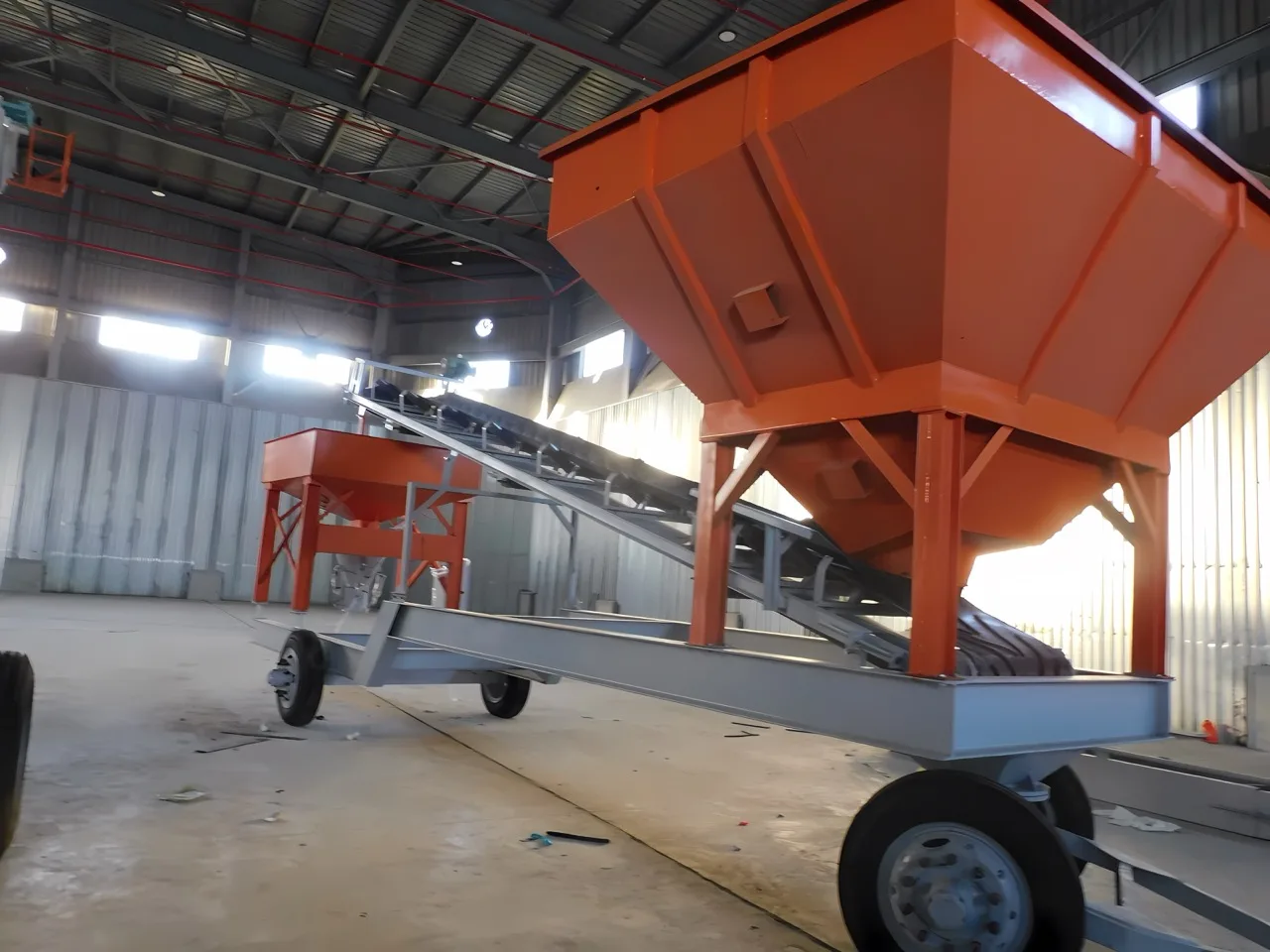
- Conveyors and structural: 4 – 6 million
- De-dusting / classification: 1.5 – 3 million
- PLC bag filling station (50 kg + jumbo): 2 – 3.5 million
- Civil + electrical + controls: 3.5 – 5 million
- Total turnkey: 26 – 38.5 million EGP
Margin Math: Why This Line Pays Back
Run-of-mine quartz costs 90–140 EGP/ton. Ceramic-grade 0–1 mm quartz sand sells in Egypt for 380–520 EGP/ton — and to ceramic and glass exporters for higher. At 50 TPH × 280 EGP delta × 200 working days × 14 hr/day, gross margin uplift is approximately 39 million EGP/year. The plant pays back inside the first year.
The Three Things Most Quartz Plants Get Wrong
- Substituting cone for VSI — saves capex, costs you the ceramic specification permanently.
- Manual bagging — humans cannot maintain ±0.2 kg accuracy at 50 TPH. PLC bagging is mandatory.
- Single-fraction stockpile — you will be unable to fulfill mixed orders without re-handling.
Pillar's Quartz Line Reference
We delivered the engineering, supply, and installation of a quartz processing line in Alexandria for a glass and ceramics manufacturer — including BARMAC VSI, multi-deck screens, conveyors, and a jumbo bag filling station. Final product: 0–1 mm high-purity quartz sand at 50 TPH. The same template is replicable across the Western Desert, Sinai, and Eastern Desert quartz reserves.
Ready to Move Forward?
Pillar's engineering team has delivered turnkey crushing, screening, conveyor and asphalt solutions across Egypt — from Upper Egypt cement plants to Sinai phosphate operations. If you're sizing equipment for a new project, evaluating ROI, or upgrading existing capacity, we can help you spec the right system the first time.
Request a Quote → or call +20 107 067 0649.